
Listen to this article:
Water has always been precious in the areas of Kenya where Word Forest works. This year, it has become critical.
Across Coast Province, prolonged drought conditions are placing immense strain on communities, ecosystems and food systems. Rainfall has been erratic and insufficient, temperatures are high, and surface water sources are under constant pressure. For tree nurseries like ours, water scarcity is not an abstract risk. It is a daily operational challenge.
Our sapling nursery sits at the heart of the Word Forest Permaculture Teaching Centre. This is where tens of thousands of young trees are nurtured each year before being planted across degraded landscapes. These saplings represent future shade, food security, soil regeneration and income for local communities. Yet at their most vulnerable stage of life, they depend entirely on a reliable water supply.
That reliability has been badly shaken.
Much of Coast Province relies on water from the Baricho system, which was severely damaged by flooding last year. Although repairs are ongoing, the pumps are still not operating at full capacity. This has had a knock-on effect across the region, reducing availability and increasing competition for water. As a result, water deliveries by truck have become both more frequent and significantly more expensive. For a small charity, this is a heavy and unpredictable cost.
Rather than accepting water waste as inevitable, our team has been working hard to rethink how every litre is used.
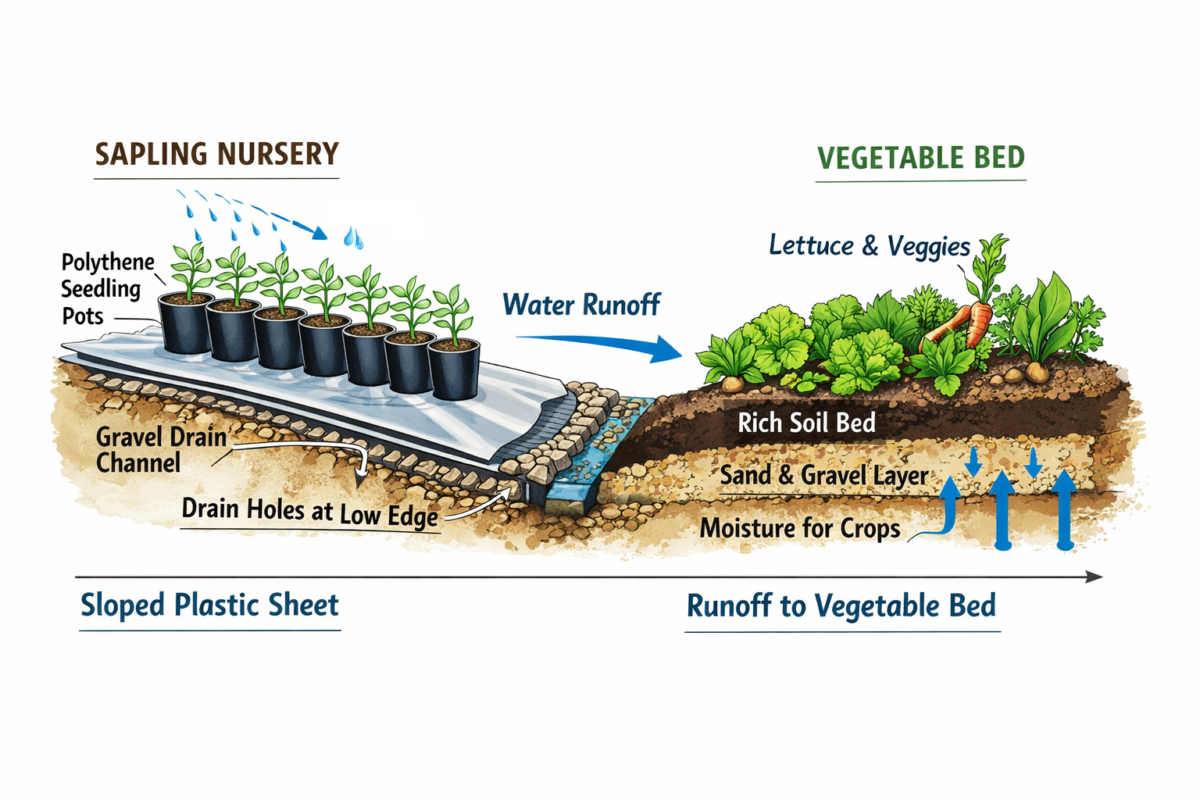
One of the most promising innovations we are trialling is deceptively simple. Beneath rows of potted saplings, we are laying sloped plastic sheets. When the trees are watered, excess runoff no longer disappears into the ground. Instead, it is captured and channelled downslope into adjacent salad beds, where lettuce and other soft vegetables are grown. This approach allows the same water to support both tree production and food crops, increasing overall productivity without increasing consumption. It also aligns closely with permaculture principles, turning waste into a resource.
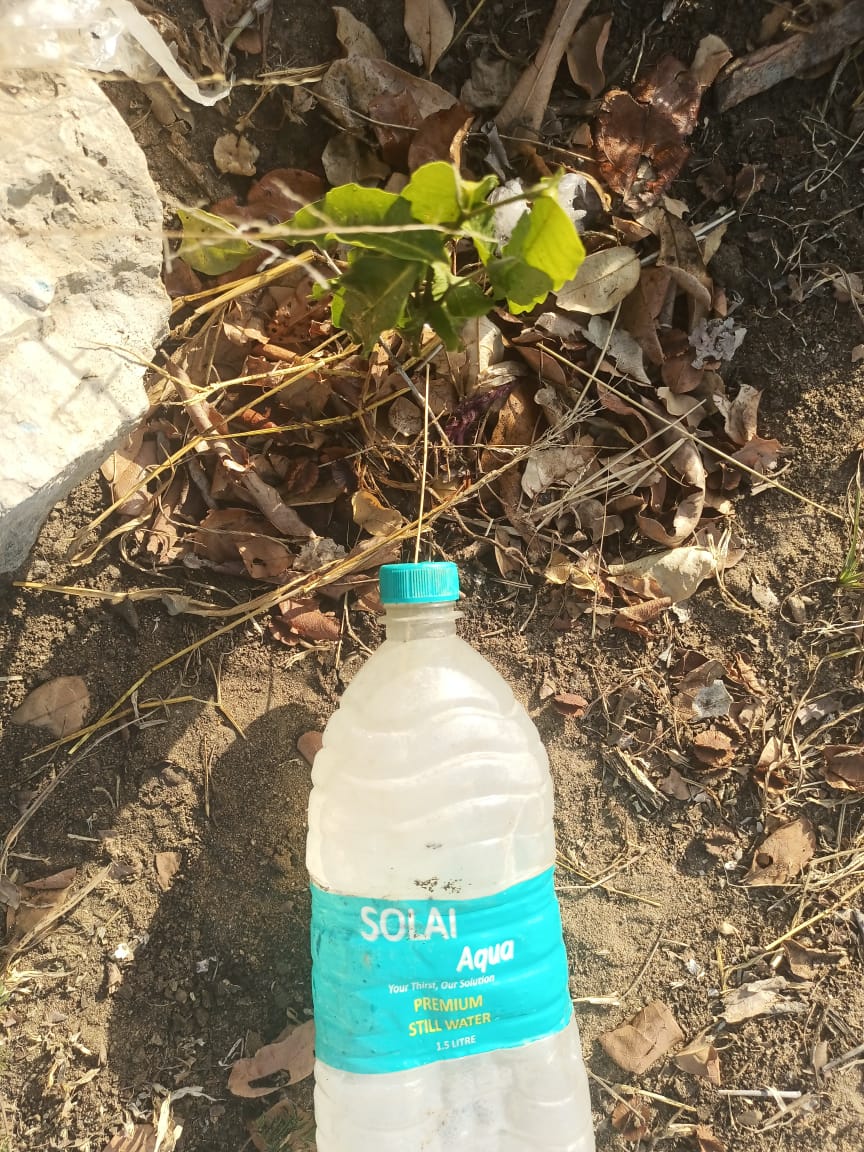
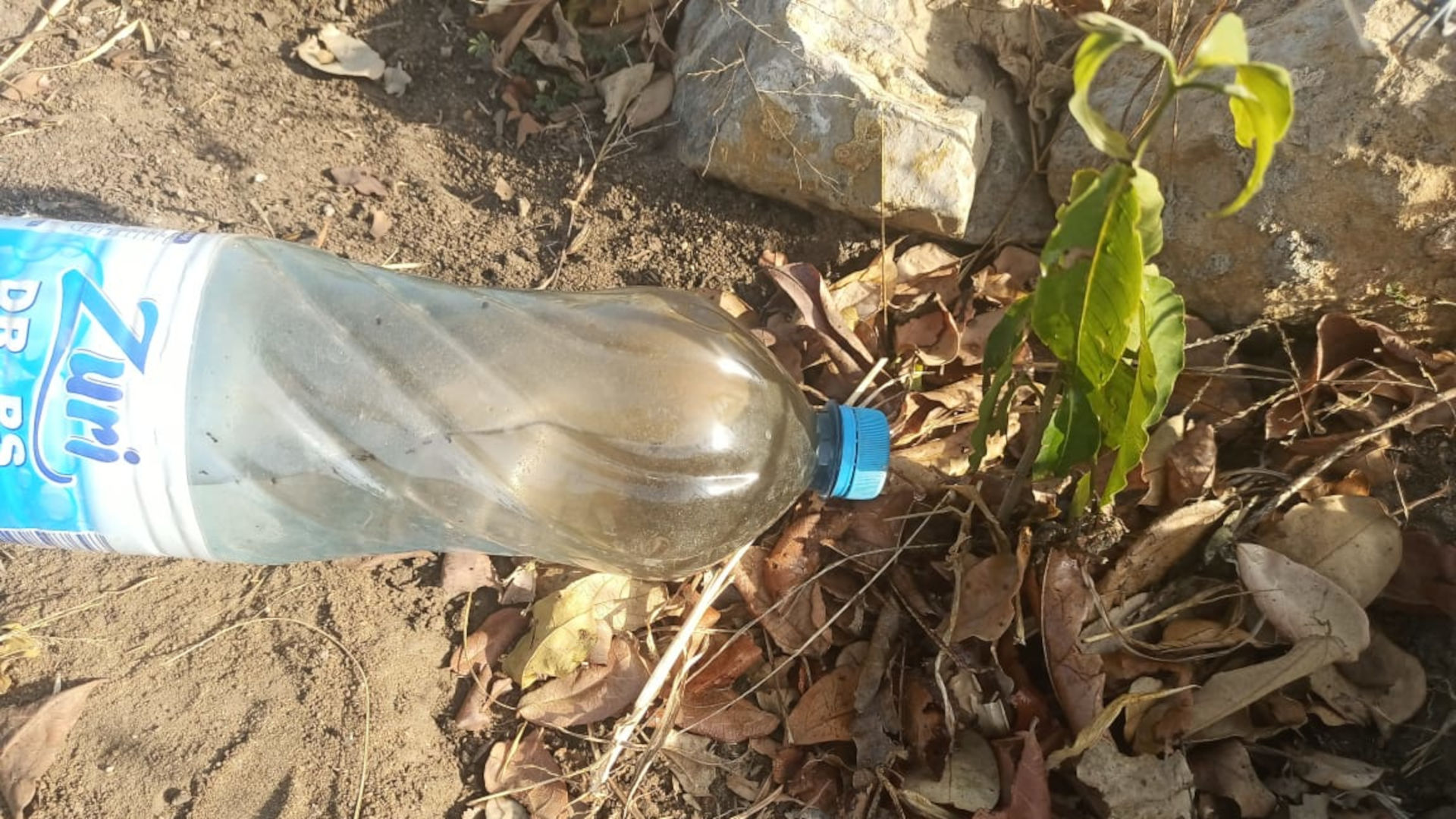
We are also making extensive use of something many people throw away without a second thought: empty 1.5 litre plastic bottles.
Our team actively collects discarded bottles locally and repurposes them for drip irrigation. Each bottle is filled with water, pierced with small holes, and placed at the base of a sapling. Instead of a single watering event that quickly evaporates or drains away, the bottle releases water slowly over several days. In practice, one filled bottle can provide consistent moisture for up to five days, dramatically reducing water use while improving plant survival.
To take this further, we are currently investigating purpose-made drip irrigation spikes. These replace the standard bottle lid with a controllable drip outlet and a spike that anchors the bottle securely into the soil. This allows for even more precise water delivery and reduces labour time for staff. Importantly, it builds on an existing, low-cost system rather than replacing it with expensive infrastructure that would be difficult to maintain.
All of this work is taking place against a backdrop of ongoing uncertainty. Water remains scarce. Costs remain high. Infrastructure remains fragile.
And yet, despite these challenges, we are moving forward.
In the coming weeks, we are preparing to raise and care for another 7,000 saplings, timed carefully so they will be ready for planting during the long rains next month. These young trees will soon leave the nursery and begin their lives growing safely in our PTC, where they will help restore soil, retain moisture and build resilience against the very drought conditions that make their early care so demanding.
Water scarcity is one of the defining challenges of our time. At our Permaculture Teaching Centre, it is also a powerful teacher. It reminds us that sustainability is not about grand gestures, but about thoughtful systems, local ingenuity and respect for every drop.
Simon West and The Team