
Listen to this article:
Kajiado County, much like other parts of the Tsavo ecosystem in southern Kenya, suffers frequent human-elephant conflict, particularly during the dry months or following poor harvests. Communities bordering wildlife corridors have seen waves of crop destruction, threatening both livelihoods and safety. In response, beehive fences—an ingenious, nature-based deterrent—are emerging as a transformative solution.
The Promise of Bees: A Natural Deterrent
Introduced by Dr. Lucy King and her team at Save the Elephants, beehive fences rely on elephants’ instinctive fear of honey bees, particularly around sensitive areas such as the trunk, eyes, and mouth.
In nearby Tsavo East, where similar landscapes overlap with Kajiado’s borders, fences consisting of suspended beehives spaced at 10-meter intervals across wires have demonstrated up to 80–86% effectiveness in preventing crop raids. Dr. Mary Bates, writing for Psychology Today, notes that multi-year studies show success rates between 76% and 86%, depending heavily on hive occupancy and seasonality.
Community Voices: Lessons for Kajiado
While direct quotes from Kajiado are still being documented, farmers in Tsavo—who share the same ecological and socio-economic context—offer vital insight.
Hesron Nzumu, a farmer near Tsavo East, explains:
“Elephants have come to my farm, but they couldn’t manage to enter… When they see [the beehives], they run away.”
He adds that honey harvests help pay school fees and ease poverty. Similarly, the African Wildlife Foundation (AWF) reports success in Kajire. Farmer Muema Masila notes, “Late last month, there were two marauding elephants… but no crops were destroyed.” Another farmer, Koki Ndambuki, says elephants now avoid her farms even when hives are unoccupied: “They still avoid approaching the fence.”
AWF Community Development Officer Mary Wanyika underscores the importance of community ownership: “Human-wildlife conflict mitigation requires adaptive management. Getting local communities involved creates ownership and inclusivity. Bee farming also fits as a livelihood project to economically empower the farmers.”
How Beehive Fences Work
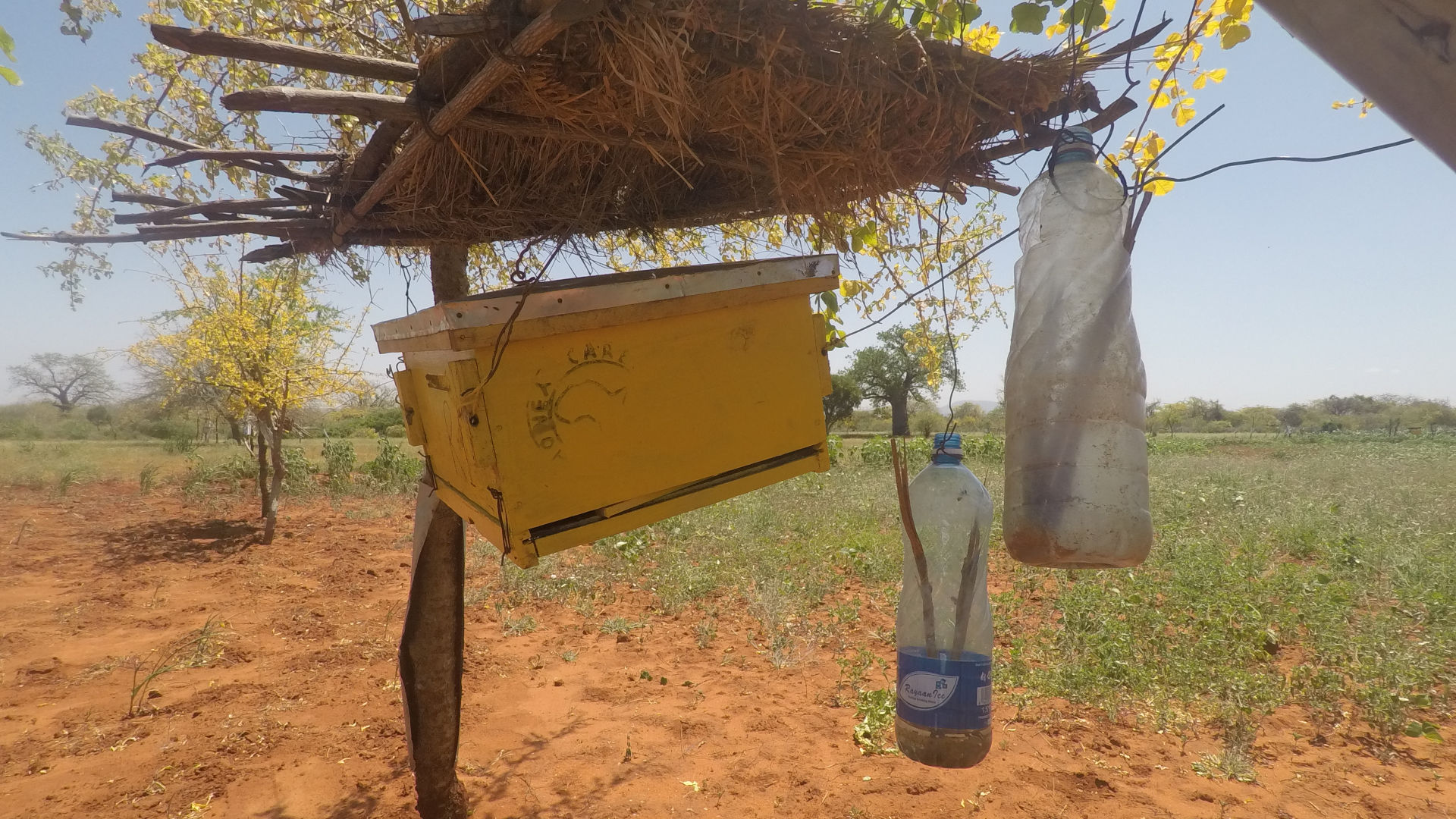
- Structure: Posts are installed at regular intervals. Real beehives are alternated with “dummy” hives and suspended on wires at chest height, typically 7–10 meters apart.
- The Reaction: When an elephant touches or pushes the wire, the hives swing. This disturbs the bees, which then swarm and sting the elephant’s sensitive areas, causing it to retreat.
- The Warning: Elephants often emit warning rumbles, signaling danger to the herd, which then learns to avoid the fenced area entirely.
Effectiveness & Constraints
In Kenya, efficacy averages around 80%, though this can dip during prolonged droughts when hive occupancy declines. Challenges include maintenance costs, protecting hives from honey badgers, and managing seasonal bee migrations.
Economic & Ecological Benefits
Honey production serves as a secondary income stream. In Tsavo, individual profits contribute to cooperative funds that can reach hundreds of dollars annually—enough for school fees or agricultural reinvestment. Furthermore, bee pollination improves crop yields and supports local biodiversity.
Community cohesion is also bolstered. As farmers organize into cooperatives for training and maintenance, their attitudes shift; many who once “hated” elephants now view them as neighbors to be coexisted with responsibly.
Scaling Beehive Fences in Kajiado
Given Kajiado’s proximity to Tsavo, adopting this model makes ecological sense. Key steps for implementation include:
- Community Engagement: Mapping elephant corridors and selecting pilot farms.
- Resource Support: Providing bee suits, smokers, and Kenyan Top Bar Hives.
- Occupancy Monitoring: Targeting at least 70–80% hive occupancy for maximum deterrence.
- Maintenance Cooperatives: Organizing farmers to share upkeep duties and profits.
Voices from Kajiado (Projected Impact)
Once fully implemented, we expect to hear testimonies such as:
- “Before the fence, elephants ruined my maize nearly every season. Now, my farm is safe—and I have honey to sell.” – Farmer, Olooloitikosh
- “These fences give us power, income, and peace of mind.” – Farmer, Rombo sub-county
While elephants remain an iconic part of the Kenyan landscape, beehive fences offer a promising path toward non-violent coexistence. By combining ecological insight with economic incentive, Kajiado can become a scalable model for sustainable conservation across Africa.
| Feature | Details |
| Primary Function | Uses elephants’ natural fear of bees to protect crops without violence. |
| Success Rate | 76% – 86% effectiveness (depending on hive occupancy). |
| Spacing | Hives/dummies are placed every 7–10 meters and linked by wire. |
| Economic Gains | Sales of “Elephant-Friendly Honey” and increased crop yields via pollination. |
| Main Challenges | Drought (leads to bee migration), honey badgers, and equipment costs. |
| Social Impact | Transforms elephants from “pests” into “neighbors” through cooperative management. |
While our primary sites remain unaffected by these specific challenges, we are committed to supporting our farmers with innovative, sustainable ways to defend saplings from local threats. Subscribe to our newsletter to discover how we are working with nature – from beehives to strategic land-shaping – to protect our planting areas and help our ecosystems thrive.
By Cyprian Ogoti and The Team